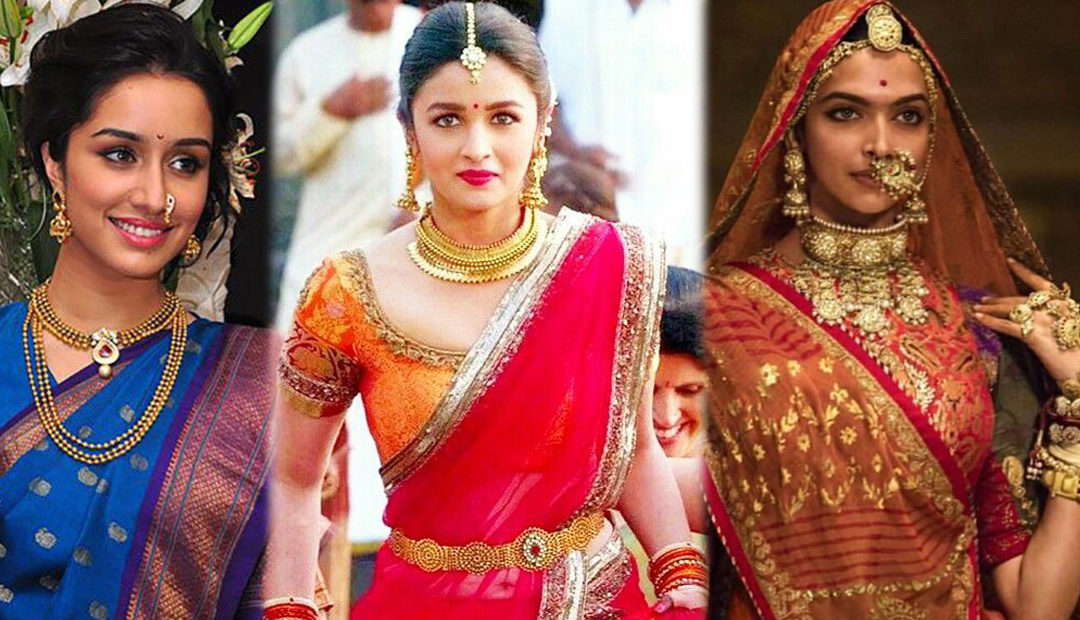
Since time immemorial, jewellery has been an integral part of Indian civilisation and culture. Over the years, jewellery has secured its place as something beautiful, auspicious, prosperous and traditional. And the best part? India’s diverse beliefs, heritage and customs have translated into wondrous unique jewellery designs coming from various states and regions. They often hold deep significance, right from motifs to the crafting process to symbolism, and are to be worn on specific occasions as well as outfits. From nose pins to necklaces, waist chains to bracelets, these traditional jewellery pieces hold a special place in the hearts of women across India.
Read on to discover all about them, where they come from and what they mean so that you can find just the ones to have in your precious jewellery box.
The Maharashtrian Nath
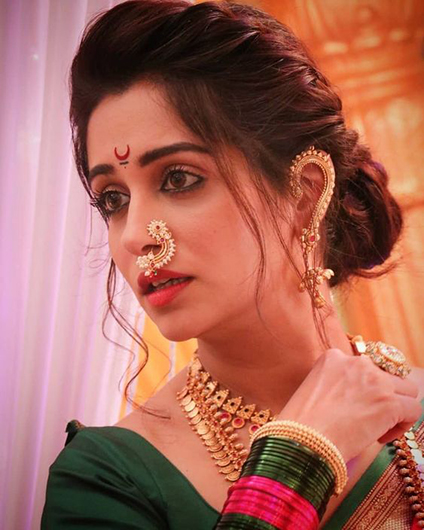
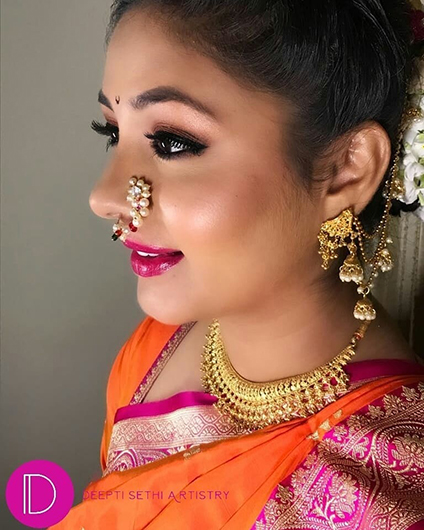
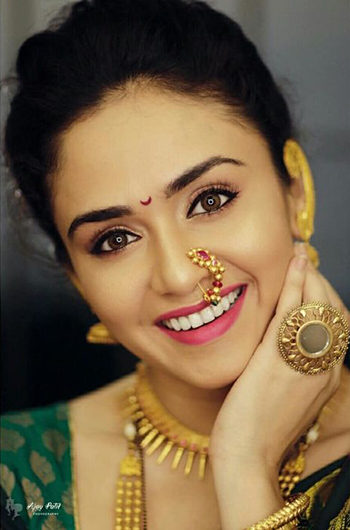
The Maharashtrian Nath or ‘nose ring’ is an integral part of the state’s culture and especially so on weddings and other festivities. While nose rings are commonplace across India, the Maharashtrian Naths are a specific kind. Bridal naths are a type in themselves, and like toe rings, symbolise a married woman. Similarly, there are many other naths as well.
However, you can always design and customise naths according to your preference, by making it smaller in size, taking off the pearls, making it in pure gold or just keeping it simple with a small diamond intact.
Source: Pinterest & Deepti Sethi Artistry
Jewellery of Rajasthan
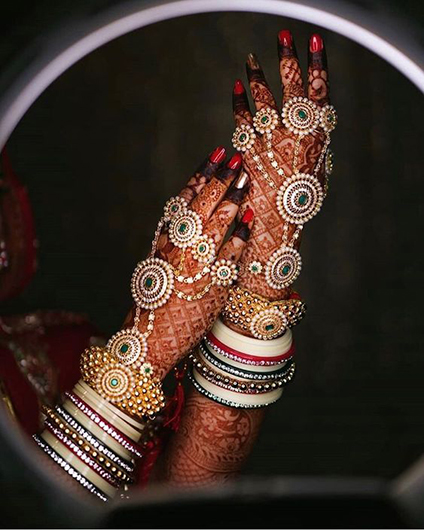
Rajasthan is royal, colourful and vibrant. The jewellery types in Rajasthan are a representation of the old traditions and traditional attire. They also reflect the creativity and innovative aesthetic sense of Indian jewellers and artists. Like the famous 17 bangles, 8 worn on the higher arm and nine at the lower arm. Or the more spectacular pieces of jewellery from Rajasthan, like the Haathphool and Karanphool.
Hathphool, sometimes called the Panchangala (jewellery for the five fingers), consists of a Kundan-set flower decorated bracelet with stone set chains leading to another flower on the back of the palm and similar chains connecting it to the five rings on the five fingers, each ring with a different flower motif. The reverse of this is covered with intricate enamel designs.
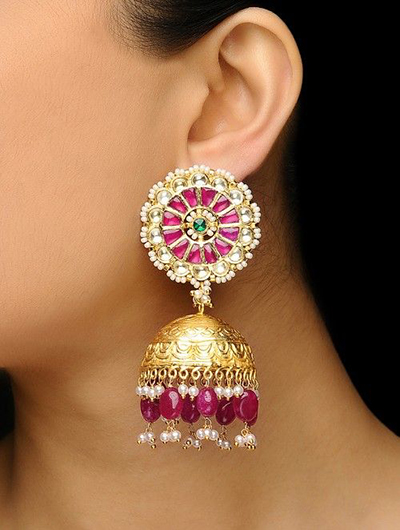
Karanphool means flower for the ear. This jewellery is made of uncut diamonds, pearls or rubies and is a marvellous addition to traditional bridal or occasion wear. While these designs peaked during the royal era of Rajasthan, they remain ever popular with women of today, from all over the country.
Source: Pinterest
The Origin of Maang Tika in Uttar Pradesh
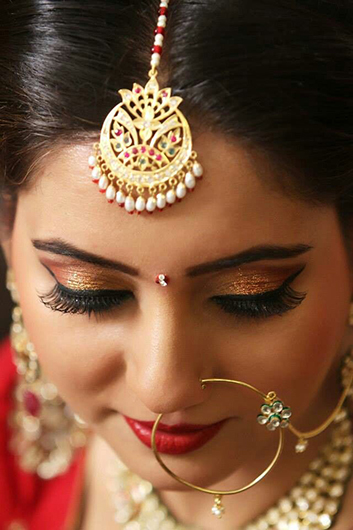
Paasa (maang tika), is a headgear worn in Uttar Pradesh, is an essential gold jewellery piece for a wedding. It is a bridal accessory and designed so that it rests on the sixth chakra- representing the third eye or power of the soul, in Hindu mythology. It comes in various levels of intricacy, from a simple dangling design to a chandelier-style layered piece. It is mostly worn in the centre of the forehead, which signifies one’s ability to control emotions and the power of concentration.
Source: Pinterest
Makers of Hansuli – Bihar
Bihar is known for its famous Bhagalpuri Silk Sarees along with traditional jewellery art.
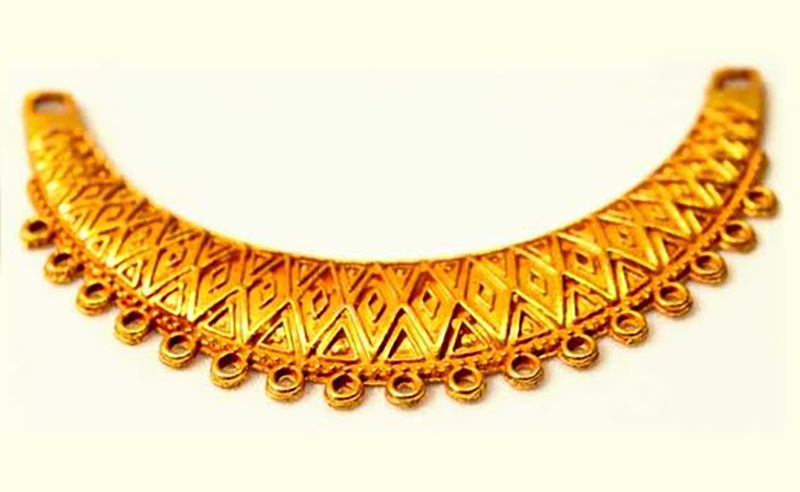
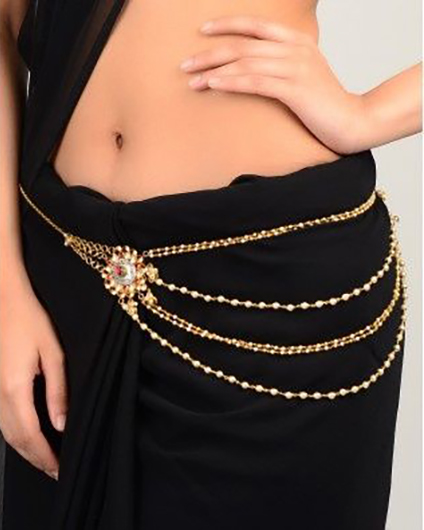
Hansuli is a gold or gold-plated necklace which has an appearance of a thick band wrapped around the neck. And Kamarbands, which adorn the waist. These stunning and beautifully handcrafted pieces come in various designs including chains and precious stones.
Image Source: Pinterest
Jammu & Kashmir – Kashmiri Jewellery
The women of Jammu and Kashmir are recognised for their beauty in India. The jewellery there is mostly made up of gold and silver, and is famous for its design. The mostly worn ornament by Hindu brides is Dezaru or Dejhoor, a pair of gold earrings, hung on a silk string or gold chain that passes through the ear and is attached to the top.
Apart from this, many local Kashmiri women wear large circular earrings called Kundal.
Source: caricature11.com
Bengal’s Chandrahar
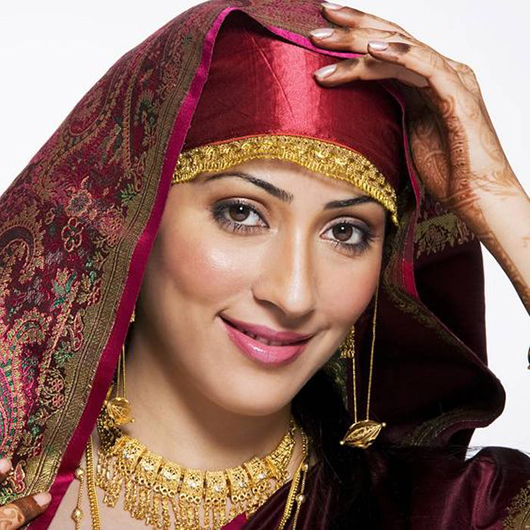
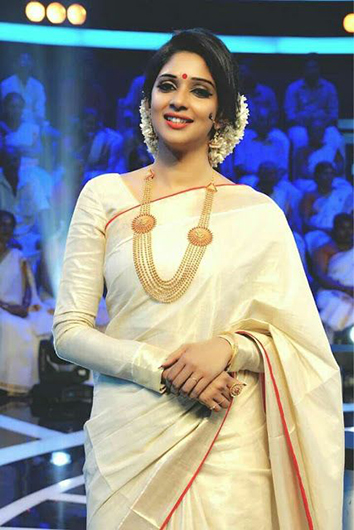
Bengal has always been famous for its unique gold jewelry with its delicate work and gold filigree detailing, which requires a great deal of craft perfection. Chandra Haar means ‘a garland of moons’. It is a very famous ornament which consists of a series of chains made up of tiny gold balls held in a criss-cross gold wire, leading down to an elaborate intricate pendant with a floral motif. Sculptors have also carved elaborate versions of this jewel on figures in the temples of Orissa. Hence, this particular jewellery holds a great mythological significance.
Source:Pinterest
Jadanagam of South India
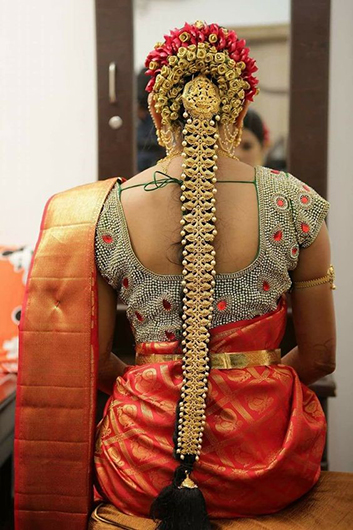
This beautiful bridal ornament is a hair serpent which is worn during weddings to decorate braided hair. It can be designed in multiple ways. It can be designed in the form of flowers and buds along with a variety of modern and customised elements. The traditional design of Jadanagam has a very important significance. For example, the rakkadi at the back of the head in the shape of the sun, symbolises brilliance and power. Followed by the crescent moon, which is evocative of calm and peace. And the third piece is the fragrant screw pine flower. This jewels is also worn by traditional dancers.
Source: My Gold Guide
Banarasi Kada
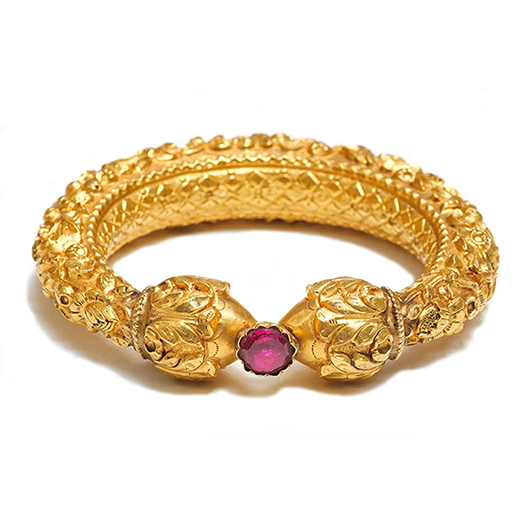
In Banarasi Kadas, or bangles, the inner side of each Kada is covered with floral designs of pink enamel, a specialty of Varanasi which is quite rare. On the outer side, are uncut diamonds and the ends of each Kada features designs of elephants with intertwined trunks. Kadas could be hollow, solid, or filled with lacquer.
Source: Pinterest
Paizeb from Hyderabad
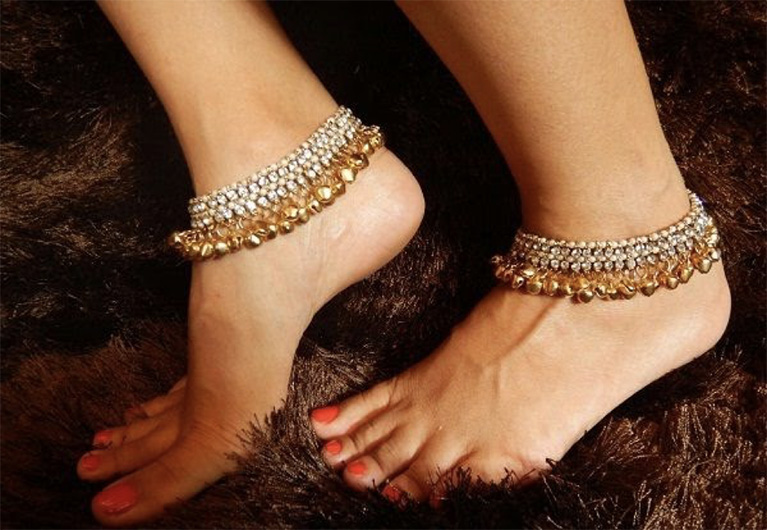
Paizeb, the name implies that it adorns the feet. This jewellery is from Hyderabad. It is composed of loose chains linked between the uncut diamonds set in gold or kundan. This is basically a traditional anklet. Many put stone drops or tinkling bells on the lower edge of the Paizeb, for added elegance.
Source: Pinterest