Diamonds hold their eternal place in jewellery as a prized precious stone that’s elegant, radiant and brilliant. But have you ever considered an alternative? With the rise in demand of light weight jewellery and the growing popularity of other gemstones, there are many more options for you to pick from, be it exquisite natural stones or pristine lab-made ones. And they can be found across the entire spectrum of cost, durability and appearance. So if you’re tempted to break tradition, find more cost-effective pieces or simply try out something new, here are a few options for you.
Moissanite
We talk about Moissanite a lot, but that’s because of its desirability and closeness to the real diamond. According to statistics, the global Moissanite market is set for rapid growth. Lab-made Moissanite is a diamond alternative that offers a very attractive price point with nearly the same beauty and durability as the real deal. Its hardness scores 9.5 on the Mohs scale, rivalling every other gemstone other than the diamond. Its brilliant refractive index score means it will stay sparkling for longer between cleans, as it doesn’t get greasy or dirty as quickly as other gemstones.
While an expert could tell the difference between Moissanite and diamonds, your friends will never know the difference.
Source: mymoissanite.com
Sapphires
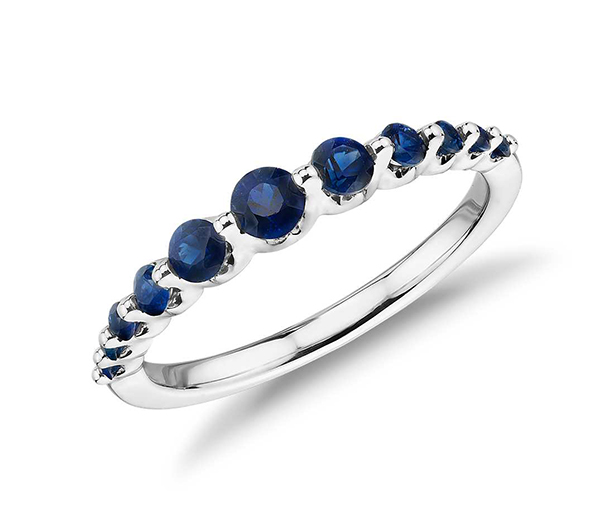
Sapphires are recognised for their brilliant blue colouring, and can also be sourced in hues such as yellow, pink, green and white. As the price is lower than diamonds, many consumers opt for sapphire engagement rings because of the availability of larger sizes at a much lower cost. At 9 on the Mohs scale, it comes in at third place after diamonds and Moissanite. Sapphires are famously associated with the colour blue, but white sapphires are actually much cheaper and have become a popular natural alternative to diamonds. Although sapphires have excellent durability, no white sapphire will match a diamond’s sparkle or scintillation. The difference between a white sapphire and diamond will be noticeable, so the simulation only goes so far. However, some consumers prefer the softer appearance of a white sapphire to a diamond.
Source: bluenile.com
Topaz
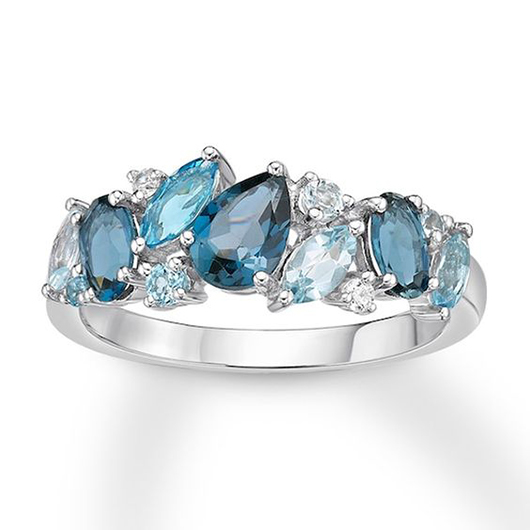
A popular choice in alternative diamond jewellery, topaz gemstones are perfect for adding a quirky touch to rings, necklaces and bracelets. You might associate topaz with the colour blue as well as its popular “imperial” yellow to red hues, but topaz actually comes in a variety of shades, including a colourless white. The imperfections of topaz can create illusions of blues, pinks, greens and other hues, making them an unusual but beautiful choice for alternative wedding stones.
If you compare the hardness of topaz to a diamond, topaz comes in at 8 on the Mohs scale. This durability makes topaz an ideal diamond alternative for your next jewellery purchase. This natural gemstone has a beautiful sparkle and brilliance but will never rival a diamond’s dispersion. In addition, topaz may chip over time, and its facet edges may wear down. The best thing is that this gemstone is very affordable and easy to replace.
Source: kay.com
Opal
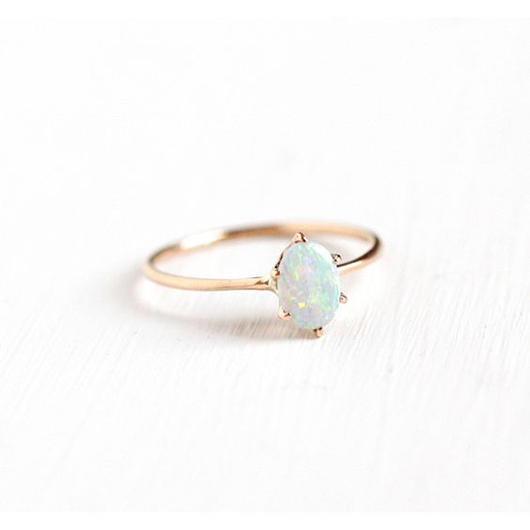
Because no two opals are the same, they can be a popular diamond alternative. While they were once thought of as old-fashioned and outdated in the jewellery world, opals are now an archaic treasure rediscovered in occasion-wear jewellery. It scores between 5.5 and 6.5 on the Mohs scale, and can’t compete with the hardness of diamonds. But what they can compete with is brilliance. Opals can be sourced in crystal, black or white, and depending on vibrancy, can reflect every colour of the rainbow as they catch the light, making them a great diamond alternative.
Image Source: Pinterest
Cubic Zirconia
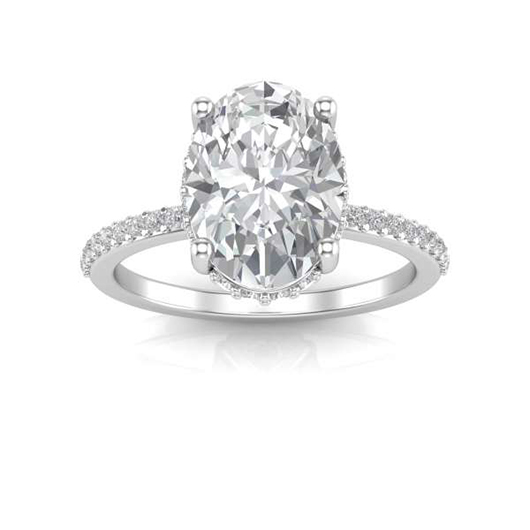
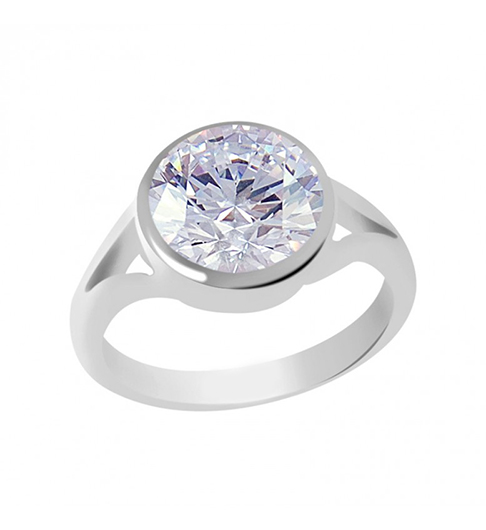
Currently, lab-made Cubic Zirconia (CZ) is the most popular diamond look alike. At a fraction of the price, it can rival diamonds in their brilliance (the light it reflects) and dispersion or fire (the colourful flashes that seem to come from within the stone). However, CZ has poor durability, making it likely to scratch or even break, and is also somewhat porous. Since it will absorb oils from your skin, it might dull over time.
Source: khimjijewels.com
White Zircon
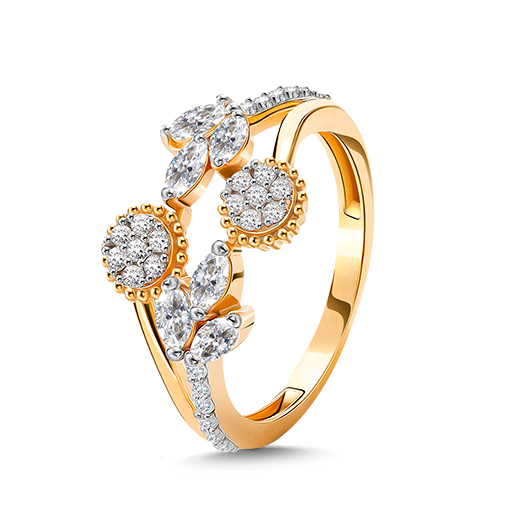
Zircon is a natural mineral. It is not to be confused with CZ. With its excellent brilliance and dispersion, it has a long history as a diamond simulate. In terms of appearance, Zircon comes closer to a diamond than any other mined gemstone. However, in terms of durability, it is far more fragile. It will easily chip and abrade with wear. Nevertheless, white Zircon is affordable and readily available, making replacements easy.
Source: clara.in
Quartz
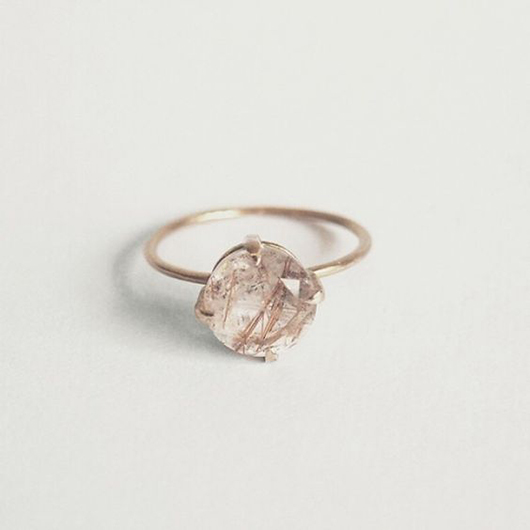
As one of the most common gemstone minerals, quartz or rock crystals make a very affordable diamond alternative. They look better than a mediocre diamond. However, quartz will accumulate scratches over time, losing its sparkle and hence it is not considered the best available alternative.
Source: Pinterest
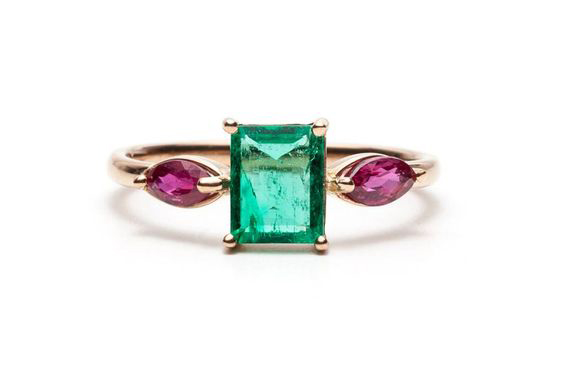
Emeralds & Rubies
Emeralds & Rubies are also two beautiful gemstones that while cannot rival diamonds in their brilliance, they certainly can be just as enchanting and gorgeous. Especially when set in exquisite designs.
Source: Pinterest
